The beauty industry is undergoing a digital revolution that's blurring the lines between fantasy and reality. What began as extravagant runway makeup looks designed solely for artistic expression has now found its way into everyday consumer experiences through groundbreaking virtual try-on technology. This innovation represents more than just a novel shopping feature—it's fundamentally changing how consumers interact with beauty products and how brands conceptualize product development.
The Genesis of Virtual Try-On
Virtual try-on technology didn't emerge overnight. Its roots can be traced back to early augmented reality applications in the gaming and entertainment industries. Beauty brands initially experimented with basic shade-matching tools, but today's sophisticated systems can render hyper-realistic makeup applications that account for skin texture, lighting conditions, and even facial movements. The technology has progressed so dramatically that consumers can now see how a bold runway-inspired eyeshadow would look on their own eyelids or test a celebrity red carpet lip color before purchasing.
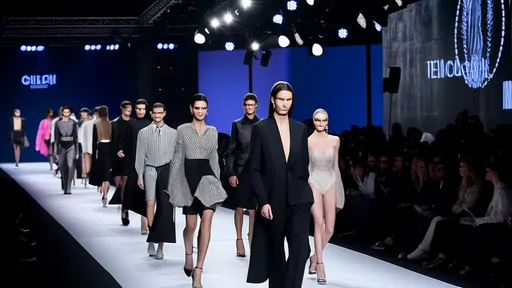
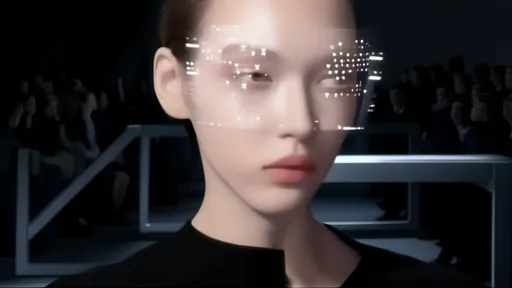
What makes current virtual try-on systems revolutionary is their ability to translate high-fashion makeup aesthetics into accessible consumer experiences. The same dramatic contouring techniques seen on fashion week models can be simulated on a smartphone screen, allowing everyday users to experiment with professional-level makeup artistry. This democratization of beauty techniques represents a significant shift in how consumers engage with cosmetics.
Technical Marvels Behind the Magic
The science powering these virtual try-on platforms is remarkably complex. Advanced facial mapping algorithms create precise 3D models of a user's face within seconds, identifying over 100 distinct facial points to ensure accurate product placement. Machine learning components continuously improve the system's ability to handle diverse skin tones, facial structures, and lighting environments. Some cutting-edge systems now incorporate real-time physics engines that simulate how liquid products like foundation would actually blend into skin texture.
Perhaps most impressive is the rendering technology that achieves photorealistic results. Unlike early versions that simply overlaid static product images, modern systems use spectral rendering to account for how light interacts with different makeup formulas and skin types. This means a metallic eyeshadow will appear genuinely reflective, while a matte lipstick will look appropriately velvety. The attention to detail extends to how makeup wears throughout the day, with some platforms simulating product fading or oxidation over time.
Bridging the Runway-Reality Gap
Historically, there's been a significant disconnect between avant-garde runway makeup and wearable everyday looks. Virtual try-on technology is eliminating this gap by allowing consumers to adapt high-fashion concepts to their personal style. A bold graphic eyeliner that might seem intimidating in a fashion show can be tested at reduced intensity to suit office-appropriate makeup. Consumers are increasingly using these tools not just for product testing, but as educational platforms to learn professional application techniques.
Beauty brands are taking note of this shift. Many now collaborate directly with makeup artists who work fashion week shows to create exclusive virtual looks that consumers can try. These partnerships often include tutorial content showing how to recreate the runway magic in real life. The technology has become so precise that some brands use virtual try-on data to inform product development, adjusting formulas and shades based on how they perform in digital simulations across diverse user demographics.
The Retail Revolution
Virtual try-on technology is reshaping beauty retail at every level. For e-commerce, it's dramatically reducing return rates for color cosmetics—historically one of the most returned product categories. Brick-and-mortar stores are implementing AR mirrors that allow customers to test hundreds of products without ever opening a tester. Luxury brands are creating immersive installations where visitors can experiment with entire runway collections digitally before making purchases.
The data generated from these virtual try-on sessions provides unprecedented consumer insights. Brands can track which products get the most virtual applications, how long users experiment with certain looks, and which combinations of products are frequently tried together. This information is proving invaluable for inventory planning, marketing strategies, and even product formulation adjustments. Some forward-thinking companies are using this data to create personalized product recommendations that go far beyond basic shade matching.
Overcoming Industry Challenges
Despite its rapid advancement, virtual try-on technology still faces hurdles. Achieving true color accuracy across different device screens remains an ongoing challenge, particularly for nuanced shades like nude lipsticks or color-correcting products. The technology also struggles with certain special effects makeup that relies heavily on texture, like glitter or extreme highlighting. However, developers are making significant progress in these areas, with new approaches to texture mapping and improved color calibration protocols.
Another critical challenge is ensuring inclusive representation across all skin tones and facial features. Early versions of the technology often failed to properly render makeup on darker skin tones or atypical facial structures. Leading platforms now prioritize diversity in their training datasets and continuously refine their algorithms to serve all users equally. This commitment to inclusivity isn't just ethical—it's good business in an increasingly global beauty market.
The Future of Digital Beauty Experiences
As the technology continues evolving, we're seeing the emergence of even more sophisticated applications. Some brands are experimenting with "digital first" product launches, where consumers can try virtual-exclusive shades before physical products are manufactured. Social media platforms are integrating virtual try-on features directly into their interfaces, allowing users to test trending makeup looks in real-time during live videos or Stories.
The next frontier may be fully immersive virtual beauty consultations, where AI-powered systems can recommend complete looks based on a user's facial features, skin tone, and personal style preferences. Some developers are even working on technology that could simulate how makeup would appear under different lighting conditions—from office fluorescents to evening candlelight—giving consumers unprecedented confidence in their purchases.
From its humble beginnings as a novelty feature to its current status as an industry essential, virtual try-on technology has proven its staying power. As the line between digital and physical beauty experiences continues to blur, one thing becomes clear: the future of makeup isn't just about the products we apply, but how we discover and interact with them in increasingly personalized, technologically-enhanced ways.
By /Aug 13, 2025
By /Aug 13, 2025
By /Aug 13, 2025
By /Aug 13, 2025
By /Aug 13, 2025
By /Aug 13, 2025
By /Aug 13, 2025
By /Aug 13, 2025
By /Aug 13, 2025
By /Aug 13, 2025

By /Aug 13, 2025
By /Aug 13, 2025
By /Aug 13, 2025
By /Aug 13, 2025
By /Aug 13, 2025
By /Aug 13, 2025
By /Aug 13, 2025
By /Aug 13, 2025
By /Aug 13, 2025
By /Aug 13, 2025
