In the ever-evolving landscape of fitness technology, a new breed of applications has emerged, seamlessly blending the rhythm of music with the cadence of running. These innovative apps are designed to synchronize the beats per minute (BPM) of a user's music library with their optimal running stride, creating a harmonious and potentially performance-enhancing experience. The concept is simple yet profound: by aligning musical tempo with physical movement, runners can achieve a more natural, efficient, and enjoyable workout.
The science behind this synchronization taps into fundamental aspects of human physiology and psychology. Humans have an innate tendency to entrain their movements to rhythmic auditory stimuli—a phenomenon observed in everything from tapping feet to a catchy song to the unified marching of soldiers. When applied to running, this entrainment can help establish a consistent pace, reduce energy expenditure by promoting economical form, and even delay the onset of fatigue by providing a motivational auditory backdrop. For many athletes and casual joggers alike, finding the right rhythm is key to unlocking their best performance.
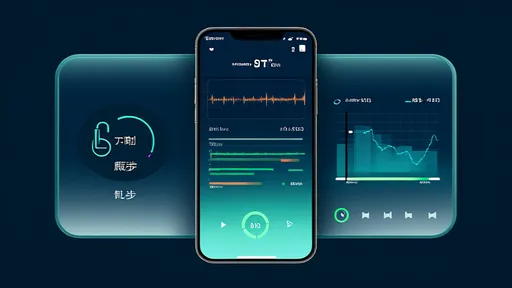
At the core of these applications is the sophisticated analysis of a user's music library. Advanced algorithms scan each track to determine its precise BPM, categorizing songs into various tempo ranges. Users can then set a target cadence for their run, typically measured in steps per minute (SPM). The app dynamically selects or generates playlists where the musical BPM matches or closely aligns with the desired running SPM. This creates a powerful feedback loop: the music subconsciously guides the runner's pace, helping them maintain a steady rhythm without constantly checking a watch or phone.
What sets the latest generation of these apps apart is their adaptive intelligence. Rather than simply playing pre-matched songs, many now use real-time data from phone sensors or wearable devices to monitor a runner's actual cadence throughout their workout. If the user begins to slow down, the app might select a slightly higher BPM track to encourage picking up the pace. Conversely, if someone is pushing too hard too soon, it might transition to a lower BPM song to help them conserve energy. This responsive approach personalizes the experience far beyond static playlists.
The benefits extend beyond mere pace consistency. Many runners report a significant psychological boost from this audio-physical synchronization. The right music can transform a grueling workout into an almost meditative state where movement and melody feel intrinsically connected—a sensation often described as "flow." This mental state not only makes exercise more pleasant but can also improve endurance as attention shifts from discomfort to the engaging auditory experience. The beat acts as a metronome for both body and mind.
For beginners, these applications serve as an excellent training tool. New runners often struggle with pacing, frequently starting too fast and burning out prematurely. By matching their stride to a steady musical rhythm, they learn to maintain a consistent, manageable pace. The external auditory cue prevents the common tendency to speed up unconsciously. Over time, this helps develop an innate sense of pace and cadence, building a foundation for more advanced training techniques. It's like having a digital coach in your earbuds, guiding every step.
Seasoned athletes utilize these tools for more specialized purposes. During interval training, for instance, a runner might program the app to alternate between high-BPM tracks for sprint segments and lower-BPM songs for recovery jogs. The music becomes an auditory signal for effort changes, eliminating the need to constantly monitor time or distance. For marathon trainers, long runs at specific "conversation pace" cadences can be reinforced with matching music, ensuring they stay in the appropriate heart rate zone through rhythmic consistency.
The technology continues to evolve with integration into broader ecosystems. Many running-BPM apps now connect with popular streaming services, vastly expanding their available music libraries beyond a user's personal collection. Some incorporate heart rate data from Bluetooth monitors to create triple synchronization—matching music tempo not just to stride but to cardiovascular effort. Others use machine learning to analyze which songs best motivate individual users beyond mere BPM matching, considering factors like genre preferences and lyrical content.
Despite the clear benefits, developers face interesting challenges in perfecting this technology. Not all songs with identical BPMs create the same motivational impact—a driving rock song at 180 BPM might encourage a harder effort than a relaxed electronic track at the same tempo. The apps must therefore balance mathematical precision with artistic and psychological considerations. Furthermore, individual stride length and running economy mean that the ideal BPM-to-SPM ratio can vary slightly from person to person, necessitating customizable calibration features.
Looking forward, the convergence of biometric data, artificial intelligence, and music technology promises even more personalized experiences. Future iterations might automatically adjust tempo based on real-time fatigue indicators or even generate original, adaptive music that subtly changes key and intensity to match a runner's evolving energy levels. The potential for rehabilitation should not be overlooked either—these applications could be tailored to help patients recover gait patterns after injury by gradually increasing tempo as mobility improves.
As this technology becomes more sophisticated and widespread, it raises fascinating questions about the relationship between technology and human performance. The ancient practice of running—one of humanity's most fundamental movements—is being enhanced through digital innovation. Yet the core experience remains profoundly human: the joy of movement, the power of music, and the satisfaction of finding one's perfect rhythm. These applications don't replace the runner's innate abilities; they simply provide the modern tools to unlock them.
For anyone looking to enhance their running experience, exploring a BPM-matching application could be transformative. Whether aiming for a new personal best, seeking consistency in training, or simply wanting to make workouts more enjoyable, the fusion of music and metrics offers a unique advantage. In the symphony of fitness technology, these apps provide the conductor that helps every runner find their rhythm and perform at their peak.
By /Aug 25, 2025

By /Aug 25, 2025
By /Aug 25, 2025
By /Aug 25, 2025

By /Aug 25, 2025

By /Aug 25, 2025

By /Aug 25, 2025

By /Aug 25, 2025

By /Aug 25, 2025

By /Aug 25, 2025
By /Aug 25, 2025

By /Aug 25, 2025
By /Aug 25, 2025
By /Aug 25, 2025
By /Aug 25, 2025

By /Aug 25, 2025

By /Aug 25, 2025
By /Aug 25, 2025
By /Aug 25, 2025

By /Aug 25, 2025
