In the world of high-performance sports, arts, and even everyday skill acquisition, a powerful mental technique has been quietly revolutionizing how individuals prepare for success. This method, known by various names such as mental rehearsal, visualization, or cognitive pre-performance, involves the intricate process of running through a perfect sequence of actions within the safe confines of one's mind. It is a form of training that requires no physical equipment, no specific location, and yet, its impact on real-world performance can be profound and, at times, astonishing.
The core principle behind this practice is elegantly simple: the brain, when vividly imagining an action, activates neural pathways strikingly similar to those engaged during the actual physical execution of that same action. Neuroscientific studies using functional MRI scans have provided fascinating evidence for this phenomenon. When a pianist mentally rehearses a complex sonata, the motor cortex, the brain's region responsible for planning and executing movements, lights up almost identically to when their fingers are actually dancing across the keys. This neural firing, this "practice in the mind," strengthens the connections between neurons, essentially carving a more defined and efficient pathway for the performance. It's a rehearsal for the very wiring of your brain.
This is far more than mere daydreaming or positive thinking. Effective visualization is a deeply immersive and structured process. It is not enough to simply have a vague, fleeting thought about crossing a finish line. The magic lies in the vividness and detail. To truly harness its power, an individual must engage all their senses. A gymnast visualizing her routine on the balance beam shouldn't just see the apparatus; she should feel the cool, slightly rough texture of the beam under her feet, hear the specific sounds of the gym, and even experience the internal kinesthetic sensations of each twist and turn. She should feel the stretch in her muscles during a leap and the precise shift in balance during a landing. The more sensory information packed into the mental simulation, the more real it becomes to the brain.
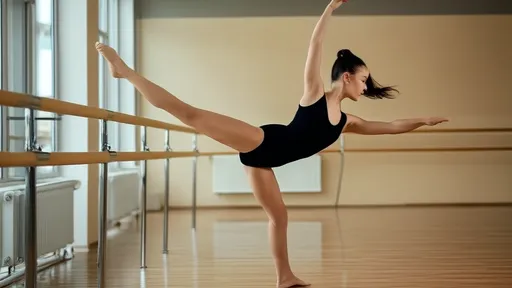
Furthermore, the perspective from which one visualizes is crucial. There are generally two approaches: the first-person (internal) perspective and the third-person (external) perspective. Viewing the performance from inside your own body, through your own eyes, is invaluable for connecting with the internal feelings and proprioceptive feedback of the movement—the feeling of a perfect golf swing or the rhythm of a swim stroke. Conversely, watching yourself perform as if you were an observer in a video can be incredibly useful for analyzing and perfecting form, technique, and spatial awareness. The most effective mental training often involves a fluid combination of both perspectives, allowing for a comprehensive mental blueprint.
The applications of this technique extend far beyond the Olympic podium. While elite athletes like Michael Phelps and Lindsey Vonn have famously used mental rehearsal to prepare for competition, its benefits are universal. Surgeons mentally walk through complex procedures before making an incision, visualizing each step and anticipating potential challenges. Musicians memorize entire concertos by playing them in their minds, note for note. Public speakers rehearse their presentations, imagining a captivated audience and their own confident delivery. Even individuals facing stressful situations, like a difficult conversation or a job interview, can significantly reduce anxiety and improve outcomes by mentally practicing a calm and effective interaction.
One of the most significant advantages of visualization is its capacity for error correction and problem-solving in a consequence-free environment. On the actual ski slope, a missed gate means a lost race. In the mind, that same missed gate can be rewound and replayed instantly. An athlete can pause the mental film, analyze what went wrong, and then replay the sequence perfectly, over and over again. This process builds not just muscle memory but cognitive resilience. It prepares the mind to stay focused and adaptable when real-world imperfections inevitably occur, effectively programming the brain for success and building unshakable confidence.
Integrating visualization into a regular training regimen does not require hours of isolated meditation. It can be seamlessly woven into existing routines. Many find it most effective in a quiet space just before sleep or immediately upon waking, when the mind is most receptive. It can be done during rest periods between physical sets at the gym or in the few quiet moments before a performance begins. The key is consistency. Just as physical muscles grow with regular exercise, the neural pathways strengthened by visualization become more robust and automatic with repeated practice.
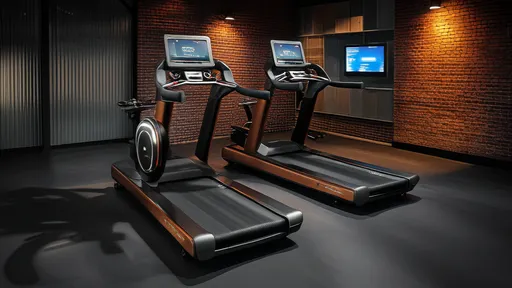
It is, however, critical to understand that mental rehearsal is a supplement to, not a replacement for, physical practice. The body must still learn the physical sensations and build the endurance required for performance. Visualization primes the neural system, optimizes technique, and builds confidence, but it cannot replicate the cardiovascular strain of running a marathon or the muscular fatigue of lifting heavy weights. The most successful individuals are those who masterfully combine both domains: they sweat in the gym and they sweat in the mind, creating a powerful synergy between thought and action.
Ultimately, the practice of visualizing perfect action is a testament to the incredible power of the human mind. It is a tool that allows us to sculpt our potential from the inside out, to practice excellence anywhere and at any time. By deliberately and vividly imagining our success, we are not merely wishing for it; we are actively constructing the neural architecture to achieve it. We are telling our brain a story of flawless performance, and in doing so, we invite our body to step into that story and make it a reality.
By /Aug 25, 2025

By /Aug 25, 2025

By /Aug 25, 2025

By /Aug 25, 2025

By /Aug 25, 2025

By /Aug 25, 2025

By /Aug 25, 2025

By /Aug 25, 2025

By /Aug 25, 2025

By /Aug 25, 2025

By /Aug 25, 2025

By /Aug 25, 2025
By /Aug 25, 2025

By /Aug 25, 2025

By /Aug 25, 2025

By /Aug 25, 2025

By /Aug 25, 2025

By /Aug 25, 2025

By /Aug 25, 2025

By /Aug 25, 2025
